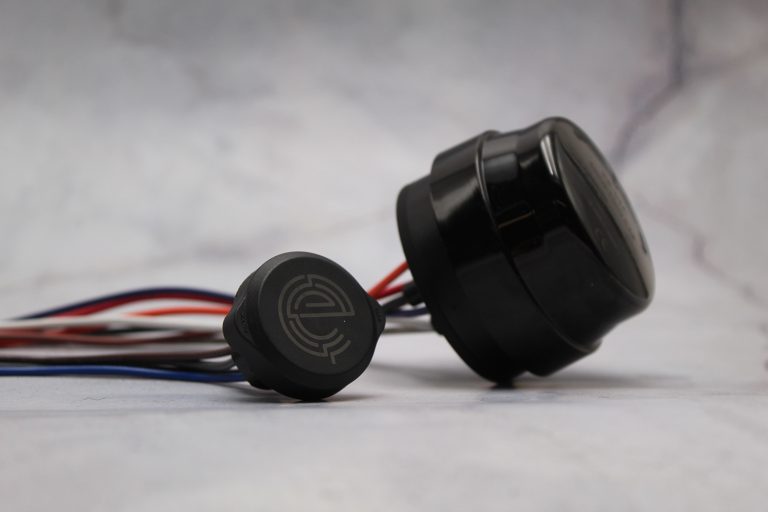
In the field of outdoor LED lighting—and specifically public and urban lighting—the so-called NEMA sockets and Zhaga sockets represent an essential element for lighting control and communication between the environment, drivers, and LED modules. NEMA and Zhaga connectors offer the opportunity to prepare existing luminaires for future technologies. This standardization process makes it possible to specifically modify the control unit without having to replace the entire LED luminaire.
What are the differences and specific features of the two sockets?
Contents:
1. NEMA socket: definition and general description
2. LCE NEMA sockets
3. Zhaga Book 18 standard in the European LED luminaire market
4. LCE Zhaga sockets
5. Zhaga sockets vs NEMA
6. Specifications
6.1 NEMA SOCKET
6.2 ZHAGA SOCKET
NEMA Socket: Definition and General Description
NEMA stands for National Electrical Manufacturers Association, a U.S. association that provides a widely adopted market standard in the American continent (less so in Europe) covering electrical equipment and ensuring safety, efficiency, and compatibility. This concept also includes the standardization of connectors in lighting systems. The NEMA socket generally referred to includes 3-pin, 5-pin, and 7-pin NEMA versions. These are interfaces for installing lighting controllers that primarily communicate using RF Mesh technology and are powered by AC and high voltage. The 5-pin and 7-pin terminals can be connected to 0–10 V dimming control, PWM, or DALI.
In 1979, the ANSI C136.10 standard for lighting control in public and private lighting systems was first introduced. In 2013, NEMA added a new standard, ANSI C136.41, whose physical interface includes four new low-voltage pins for dimming control, in line with modern control systems.
LCE NEMA Sockets
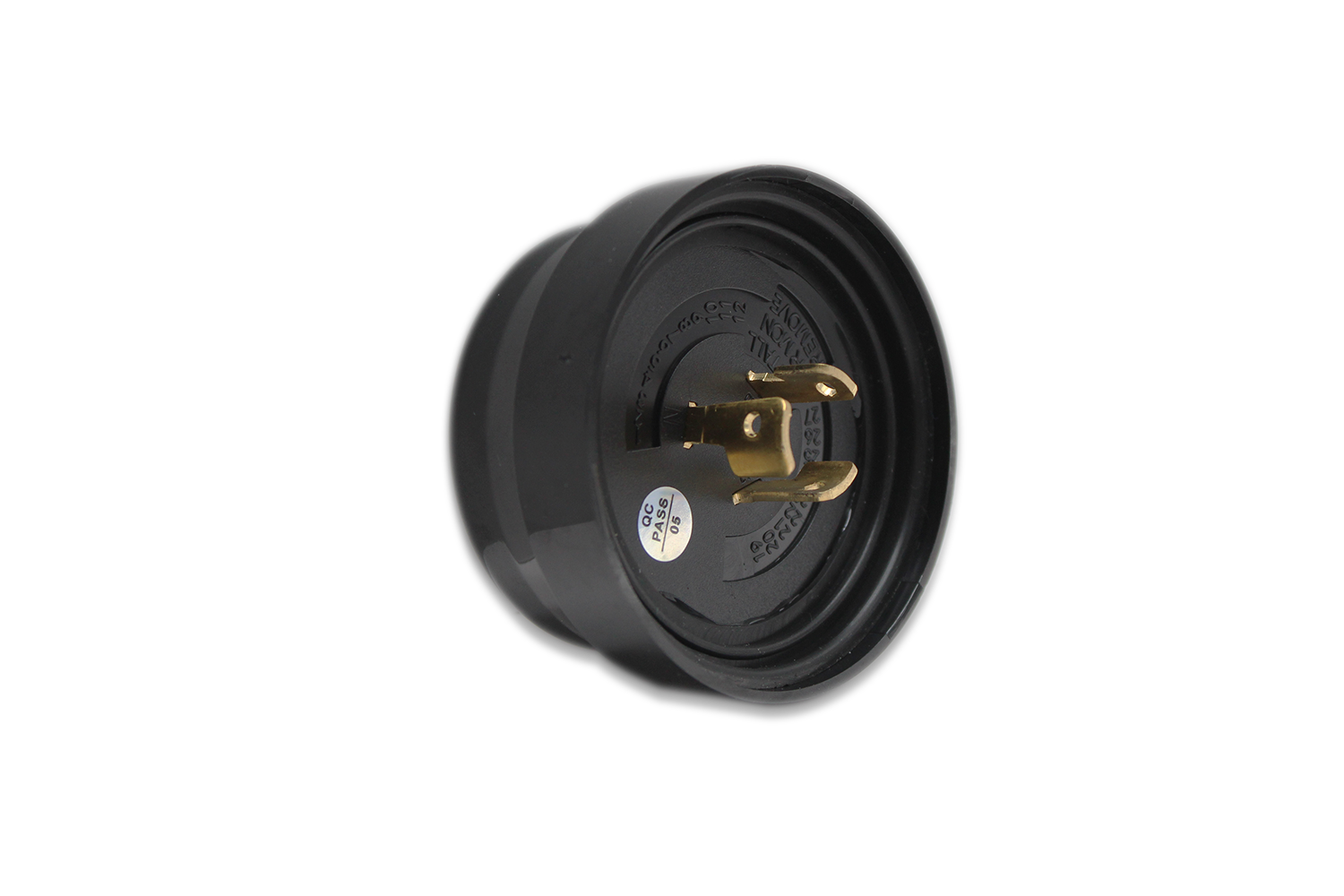
LCE’s NEMA sockets are manufactured by our partner Universal Science and are available in seven-pin versions compliant with the ANSI C136.41 standard, providing reliable electromechanical connections. The NEMA socket comes with pre-wired cables and can be screw-connected after the installer has chosen the best orientation. Connecting LED luminaires to external circuits in this way becomes simple, convenient, and fast.
The NEMA socket is combined with a shorting cap, a cap that acts as a protective device for the NEMA interface and complies with UL773 and ANSI C136.41 standards. Equipped with a twist-lock connection, it can be rotated and locked to suit street, large-area, and numerous lighting controllers. The shorting cap (without a control system) is the most common on the market and can be configured to keep the LED luminaire permanently on and, if necessary, replaced by any of the many controllers available under this standard. Finally, the NEMA socket features high current capacity and a wide application voltage range and is widely used in standard power grids worldwide.
Zhaga Book 18 Standard in the European LED Luminaire Market
In Europe, within the LED lighting sector, the market reference standard is the Zhaga Consortium, founded in 2010 with the aim of standardizing interface specifications between LED luminaires and light sources, including LED modules. The Zhaga Consortium seeks to achieve interchangeability between products from different manufacturers, offering lighting manufacturers a wide range of better and more efficient light source solutions, thereby reducing costs and development time.
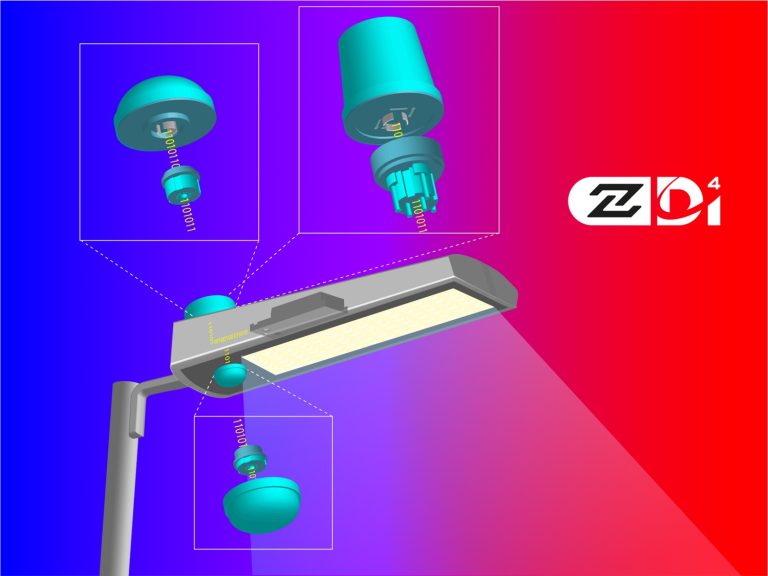
The Zhaga standard includes LED modules, LED power supplies, sensors, and controller modules. In 2019, the Zhaga Consortium expanded its scope with the launch of Zhaga Book 18, creating an interoperable system for outdoor luminaires and sensing and communication modules. The goal, once again, is to create an ecosystem of interchangeable products which—unlike the ANSI standard—is based on four low-voltage pins and a DC power supply. This standard interface is designed for sensors that implement lighting control, while also taking into account sensors used in smart cities. The lighting controller installation interface adopts auxiliary DC and low-voltage power supply and is compatible with DALI-2.0 communication protocols. Widely adopted in Europe, this standard is intended to dominate the European lighting control market.
LCE Zhaga Sockets
Our ZHAGA sockets are manufactured in Italy by our partner Universal Science, comply with the requirements of the Zhaga Book 18 standard interface (Z-LEX-R, Z-LEX-C), and have passed the relevant certifications for the development and installation of public, commercial, and residential lighting.
Compact in size, allowing greater flexibility in luminaire design, the Zhaga lampholder boasts a superior water-tightness rating (IP66) without mounting screws. It is a scalable solution that allows the use of Ø40 mm photocells and Ø80 mm LEX-M in a centralized system using the same connection interface.
The Zhaga socket also allows flexible mounting—facing upward, downward, or sideways. Finally, a very important advantage is the integrated single gasket that seals both the luminaire and the module, minimizing installation time and cost.
Zhaga Sockets vs NEMA
Both NEMA and Zhaga connectors provide interfaces for smart outdoor lighting control. They are two different standards, but with the same goal: serving the industry and enabling intelligent control of LED luminaires.
For NEMA connectors, the main advantage lies in the fact that millions of LED luminaires are already historically equipped with this technology. The NEMA socket therefore allows the addition of any control module to the luminaire. Many applications related to so-called smart cities can be implemented with great flexibility, including those requiring higher power and therefore connection to the electrical grid.
As for Zhaga connectors, the cost is lower because they are small in size, with only four connections, and are powered by the auxiliary output of the LED luminaire’s onboard driver. In addition, Zhaga sockets handle only low-voltage and low-power signals, typically 24 V at 3 W (with a peak of 10 W), suitable for low-power sensors.
Source: https://universal-science.it/en/zhaga-socket-nema-socket/
The post Zhaga Book 18 and NEMA for LED Luminaires was first published on LCE LED.