Guide for luminaire manufacturers
The EPBD LED lighting regulation is part of the sustainability framework promoted by the European Union through the Fit for 55 package, whose objective is to reduce greenhouse gas emissions by at least 55% by 2030 (compared to 1990).
This package, as an essential part of the European Green Deal, includes measures across all sectors to steer Europe towards climate neutrality by 2050.
Within Fit for 55, the 2024 revision of the Energy Performance of Buildings Directive (EPBD) plays a crucial role. Since buildings account for around 40% of energy consumption and 36% of emissions in Europe, improving their efficiency is key to achieving climate goals.
Although the EPBD LED lighting regulation is not exclusively focused on lighting, it establishes requirements that directly impact the design and management of lighting systems within buildings. With this revision, lighting is no longer an isolated element but becomes an active part of the building’s energy brain, capable of integrating with control systems, providing data, and improving comfort.
In this article, we analyze what Fit for 55 and the EPBD LED lighting regulation mean in the field of energy efficiency, and how LCE’s LED solutions are already ahead of these new requirements.
What is the Fit for 55 package?
It is the EU’s climate roadmap to reduce greenhouse gas emissions by 55% before 2030. It includes measures across all sectors—energy, transport, industry, and buildings—to achieve climate neutrality by 2050.
In this context, the revision of the EPBD Directive becomes a key tool: its objective is to decarbonize the European building stock through more efficient, renewable, and intelligent buildings.
Among the regulated technical systems, LED lighting plays a central role, as it is one of the components that most contributes to overall efficiency and energy monitoring of the building.
Today, lighting is not only measured in lumens but also in data: luminaires can provide information on consumption, maintenance, and comfort, becoming an active part of the building’s energy system.
Fit for 55 defines the what; EPBD defines the how.
2024 revision of the EPBD LED lighting regulation: the essentials
The new EPBD Directive, in force since May 2024, aims for a fully decarbonized building stock by 2050. To achieve this, it introduces a series of requirements that directly affect energy efficiency and LED lighting in buildings, as one of the technical systems regulated by the directive in relation to sustainability and intelligent control.
These changes are grouped into three main areas:
– Zero-emission new buildings: From 2028, all new public buildings must be zero-emission, and by 2030 this will extend to private buildings. This implies more efficient designs, on-site renewable energy integration, and very low-consumption technical systems, including LED lighting.
– Renovation of existing buildings: Member States must apply minimum energy performance standards (MEPS) to progressively renovate the least efficient buildings. First non-residential (2027–2030) and then residential (until 2033), with staged improvements according to their energy rating.
– Smarter and more comfortable buildings: The EPBD strengthens building digitalization by promoting automation systems (BACS), introducing the Smart Readiness Indicator (SRI), and focusing on indoor environmental quality (IEQ), where lighting plays a key role.
When does it come into force?
The directive is already official and countries have until 2026 to adapt it. In practice, any new construction or energy renovation designed today should already align with EPBD criteria and energy efficiency applied to LED lighting, encouraging manufacturers to incorporate them into luminaire design from now on.
How does the EPBD LED lighting regulation affect luminaire design?
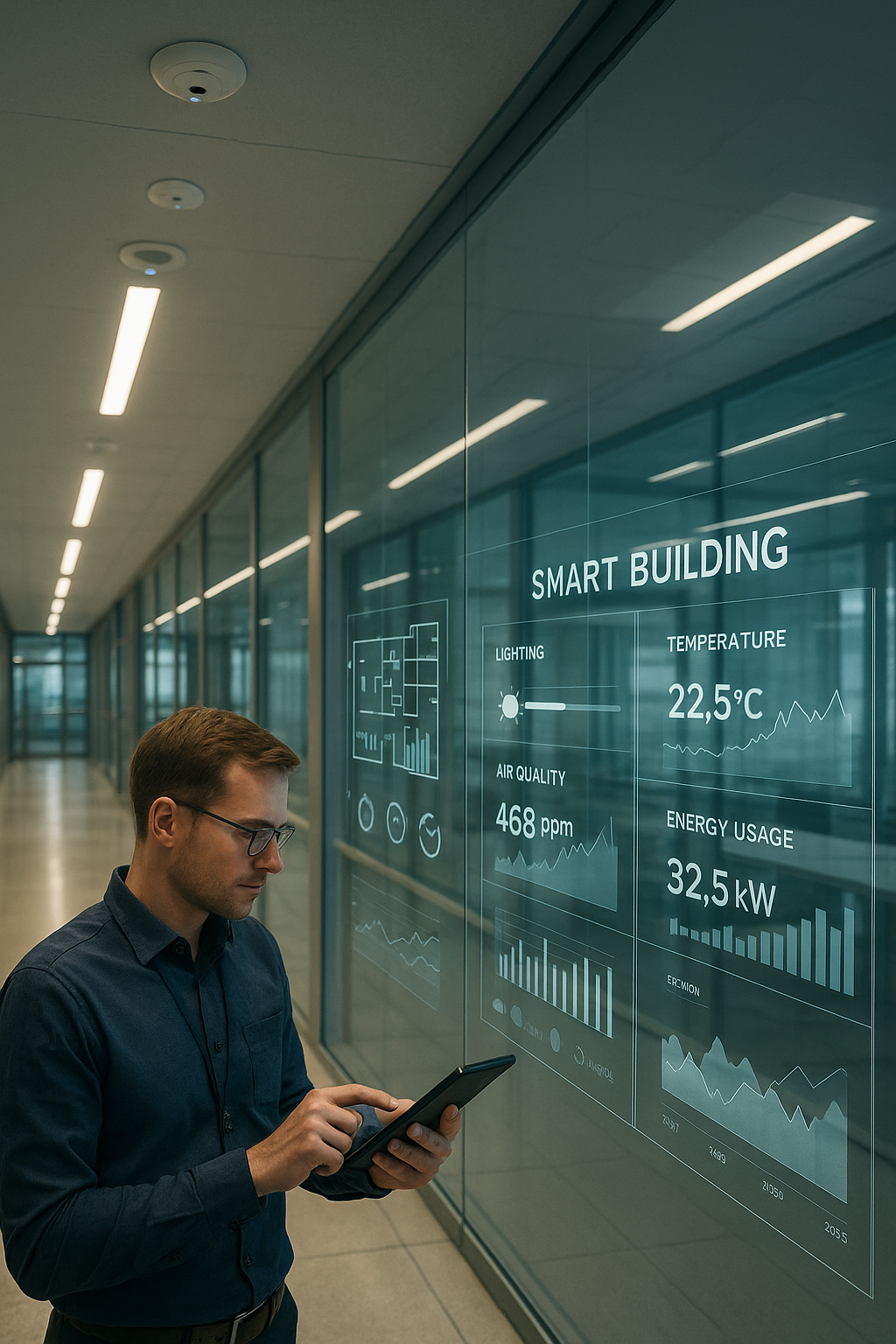
The new directive turns lighting into a strategic element of efficiency, well-being, and intelligent control in buildings. For manufacturers, this implies new requirements… and also major opportunities. In the context of the EPBD and its impact on LED lighting, we must consider:

Key aspects shaping the future of luminaire design
1. Efficiency and sustainability
Lighting directly influences the building’s energy rating. Luminaires must be more efficient, durable, and recyclable. Designs with long lifespans, upgradable components, and environmental documentation (EPD, LCA) are valued and already required in many public tenders.
2. Integration with control systems (BACS) vv
Lighting must be integrated into building automation systems (BACS or BMS). This requires compatibility with standards such as DALI-2, BACnet, or KNX, and the ability to communicate data on consumption, faults, or occupancy.
3. Smart and connected lighting
Technologies such as DALI-2, D4i, or wireless platforms (Casambi, Bluetooth) allow luminaires to be remotely controlled and monitored. This digitalization enables functions such as automatic dimming, predictive maintenance, or direct sensor integration.
4. Comfort and smart indicators
Lighting contributes to the Smart Readiness Indicator (SRI) and indoor environmental quality (IEQ). Features such as presence control, daylight harvesting, circadian lighting, CRI ≥ 90, or flicker-free operation are key to gaining points in certifications like WELL or LEED.
5. Traceability and ESG criteria
Projects increasingly require sustainability data. The application of the EPBD to LED lighting aligns with regulations such as CSRD, pushing manufacturers to offer products with traceable information: recyclable materials, validated efficiency, life cycle impact, and digital maintenance — data that allows predicting lifespan, planning replacements, or monitoring real performance on site.
LED solutions ready for EPBD: technology ahead of the curve
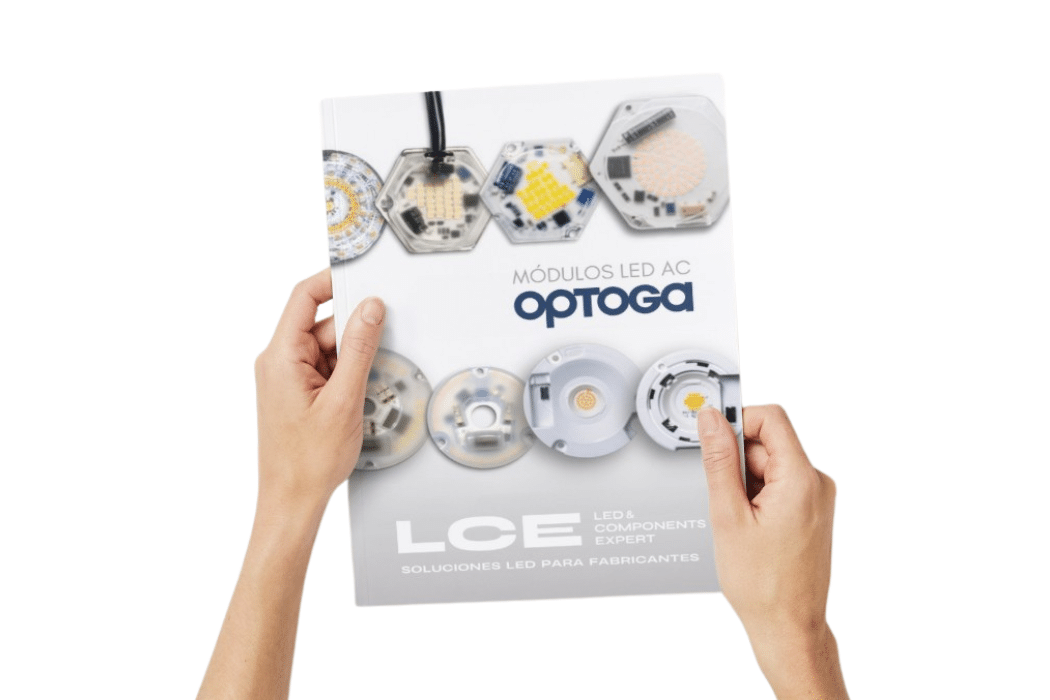
At LCE, we work with manufacturers such as Optoga to offer LED solutions already designed to meet the new requirements for efficiency, connectivity, and sustainability defined by the EPBD LED lighting regulation. One example is the OptoDrive range with DimIn DALI Memory unit, designed to facilitate integration and regulatory compliance: data monitoring, intelligent connectivity, and modular functionality.
Maximum efficiency and durability
OptoDrive modules offer excellent luminous efficacy (>150 lm/W) and advanced thermal control. DimIn monitors LED temperature in real time and adjusts performance to extend lifespan (L70 > 50,000 h), aligning with circular economy principles.
Integrated smart connectivity
DimIn is 100% compatible with DALI-2 and supports DALI memory (types 251-253), enabling the collection of data on consumption, operating hours, and luminaire status. This allows luminaires to integrate easily into BACS or BMS systems, becoming IoT nodes ready for automation and predictive maintenance.
Light quality that enhances IEQ
All Optoga modules offer CRI ≥ 90 and flicker-free versions, even when dimmed. They also include Tunable White options for human-centric lighting (HCL), essential in spaces focused on well-being, visual comfort, and compliance with IEQ criteria.
Versatility in control and protocol
In addition to the DALI standard, our modules are available with wireless connectivity (Casambi Ready, Bluetooth Low Energy), adapting to a wide range of projects. And if advanced functions are not used, they operate as a conventional DALI luminaire: maximum flexibility for manufacturers.
Why anticipating makes the difference?
For luminaire manufacturers, adapting now to Fit for 55 and the EPBD is not just about compliance: it is a real opportunity for growth and differentiation.
These are some of the key benefits for those who move ahead:
✔️ Compliance without surprises
Designing luminaires today that are compatible with DALI-2, sensors, and sustainable materials avoids future redesigns and ensures a catalog ready for 2028 and beyond.
✔️ Competitive advantage
EPBD-ready products are already valued in specifications and tenders. Having EPDs, consumption data, or measurable lighting quality opens the door to new contracts and positions you as a preferred supplier.
✔️ Reputation and sustainability
Integrating ESG criteria strengthens brand image and demonstrates a tangible commitment to efficiency and the environment. It also aligns you with your customers’ values and today’s market.
✔️ More value, more loyalty
Smart luminaires offer much more than light: they provide data, comfort, and efficiency. This not only increases unit value but also builds loyalty among customers seeking complete solutions.
In short, leading the change is better than adapting late. With solutions such as LCE’s Optoga modules, you can anticipate and offer efficient, connected, and sustainable products today: a catalog ready for the EPBD and new European requirements for LED lighting efficiency.