Efficiency, Regulations, and Solutions for Manufacturers
The design of outdoor LED luminaires goes far beyond simple luminous efficiency. Manufacturers must integrate key aspects such as regulatory compliance, sustainability, connectivity, and adaptability to new urban environments. This article reviews the main factors involved in developing LED solutions for outdoor lighting.
The Unstoppable Change in Outdoor Lighting
The outdoor lighting sector is undergoing one of its biggest transformations. New European regulations, pressure for sustainability, and urban environment demands require outdoor luminaire manufacturers to provide increasingly efficient, responsible, and adaptable solutions.
Today, it’s not just about lighting. Cities seek systems that reduce energy consumption, minimize environmental impact, and contribute to citizens’ well-being by providing safety and ensuring visual comfort in urban spaces—all monitored and controlled through intelligent management systems.
Key Design Principles for Efficient Outdoor LED Luminaires
For manufacturers, the challenge is not just understanding basic technical requirements but applying these criteria to create competitive, efficient luminaires adapted to current environments.
– Efficiency optimization without sacrificing visual comfort: It’s not just about achieving good lumen/watt values, but designing precise optics that ensure uniformity, minimize glare, and provide comfortable lighting in every urban space.
– Intelligent thermal design: Integrating thermal management systems that guarantee stable LED performance throughout their lifespan. This is crucial for optimal operation, even under demanding environmental conditions.
– Additionally, selecting durable materials and finishes: from anti-corrosion alloys to IP and IK protections adapted to real-world conditions is essential for outdoor luminaires.
– Preparedness for connectivity: Designing luminaires for integration into control systems, sensors, or smart city platforms, even if the initial installation does not include them. This allows scalable evolution as the needs and demands of the environment grow.
– Finally, regulatory compliance and anticipation of future requirements: ensuring luminaires meet current standards (European regulations, IEC recommendations…) and are ready to adapt to new sustainability and digitalization frameworks.
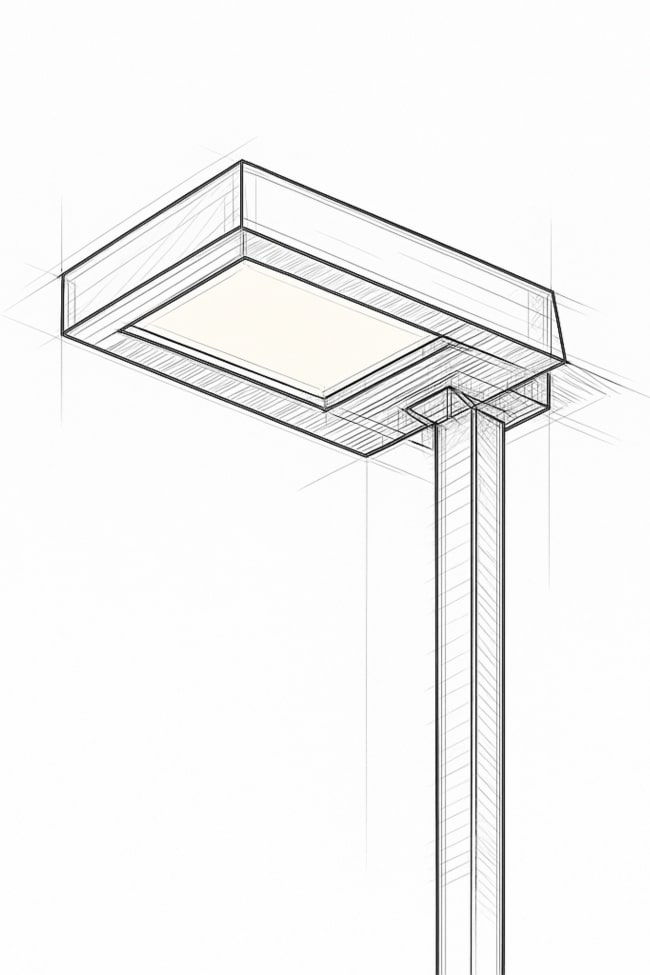
Designing Outdoor LED Luminaires for New Installations and Upgrades
Each outdoor lighting project may present different contexts: from entirely new urban developments to areas looking to modernize part of their lighting. Therefore, LED luminaire design must consider:
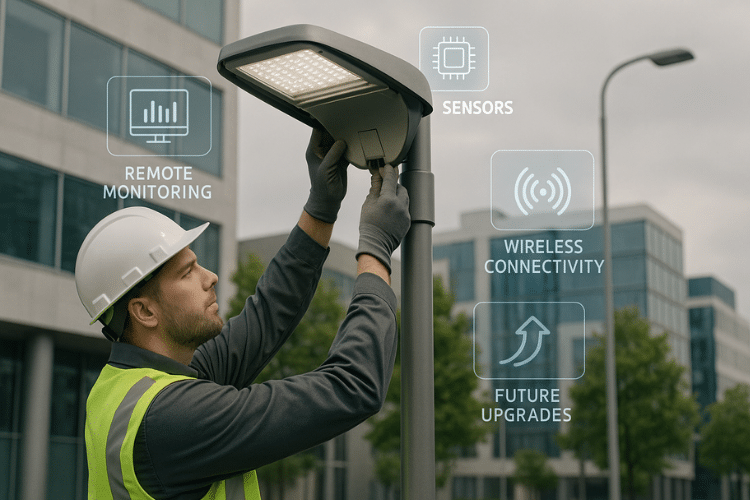
Key Trends in LED Innovation
The main challenges today include:
– Application versatility: Luminaires suitable for both new installations and integration into renovation projects.
– Ease of integration into intelligent control solutions: Compatible with remote management systems, sensors, or future expansions.
– Simplified maintenance: Designs that facilitate component access, reduce intervention time, and minimize maintenance costs throughout the product’s life.
However, not all outdoor lighting projects start from scratch. Many municipalities and companies need to modernize existing infrastructure. Therefore, LED product design now includes specific retrofit or upgrade solutions without major interventions.
At LCE, we address this need with components that easily adapt to previous systems, facilitating an efficient, fast, and cost-effective transition to LED. This versatility not only modernizes spaces but ensures the change is scalable, profitable, and aligned with current maintenance and durability requirements.
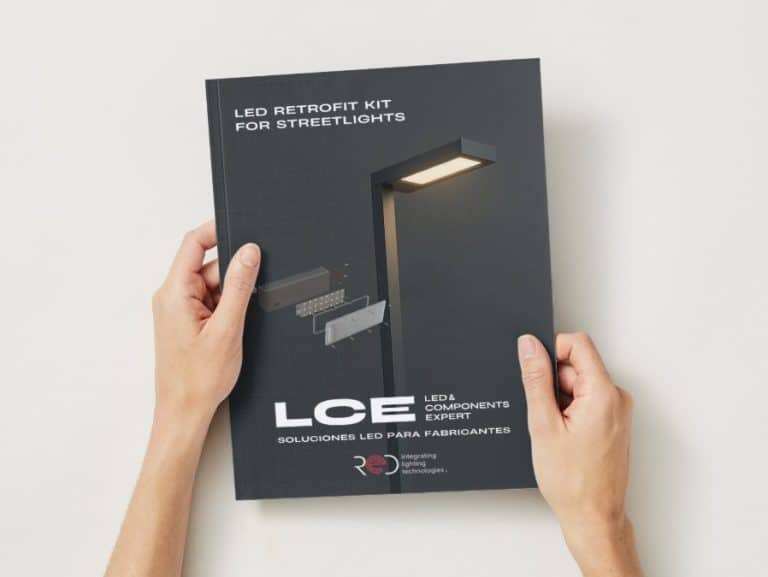
In our new catalog you will find:
LED modules:
– For STRADA lenses
– With IP protection
– Compatible with:
ZHAGA BOOK 15 / BOOK 19
– And socket ZHAGA BOOK 18 / NEMA
Sustainability in Outdoor LED Luminaire Design
Sustainability in outdoor lighting is not only a regulatory or commercial requirement but an increasingly relevant criterion in the design process itself. For manufacturers, the challenge is to develop luminaires that:
– Reduce environmental impact from material selection, favoring recyclable components, optimized manufacturing processes, and lower resource consumption throughout the life cycle.
– Facilitate maintenance and extend service life through accessible, repairable designs prepared for technical updates if necessary.
– Incorporate circular design principles, allowing disassembly, component separation, and material recovery at the end of life. In this regard, adopting standards such as Zhaga facilitates component interchangeability and efficient technological updates.
This approach aligns with European decarbonization goals, following the European Green Deal guidelines and anticipating future regulatory requirements.
*LCE Blog: Read article on Zhaga and sustainable lighting
Trends in Outdoor LED Luminaire Design
Outdoor LED luminaire design must anticipate the functionalities that will shape the sector in the coming years:
– Integration of smart sensors: Presence, motion, or environmental condition detection to adjust lighting levels according to real occupancy, optimizing energy use and safety.
– Advanced remote management systems: Integrated electronics for remote monitoring, fault detection, maintenance scheduling, and dynamic management of the installation.
– Adaptive lighting: Ability to adjust intensity and lighting profiles based on external variables such as traffic, weather, or time of day, adapting luminous flux to actual needs.
– Preparation for smart city environments: Designing luminaires as part of connected urban infrastructure, ready to integrate sensors, communication nodes, or future smart city applications.
Anticipating these functionalities during design not only ensures technically ready luminaires but also allows manufacturers to position themselves competitively in a market increasingly demanding integration, flexibility, and technological evolution.
Barcelona and Cities as Drivers of Demand
Public administrations are promoting the modernization of lighting infrastructure, with Barcelona being a prominent example:
– The Barcelona 2028 Plan envisions that 50% of public lighting will use LED technology and that 100% of control centers will be remotely managed. (Source: smart-lighting.es)
– Barcelona’s 130 metro stations are upgrading lighting through LED adaptations, prioritizing component updates over complete luminaire replacement. (Source: smart-lighting.es)
These projects clearly reflect new market demands: highly efficient LED solutions designed for integration with intelligent control systems, long durability, and in many cases, compatibility with existing infrastructure. For manufacturers, designing products that meet these criteria is becoming a key competitive factor.
Designing Today Means Anticipating the Future of Outdoor Lighting
The outdoor lighting market is evolving toward increasingly demanding models in efficiency, connectivity, and sustainability. For manufacturers, integrating these criteria from the design stage not only ensures regulatory compliance but also opens new opportunities for differentiation, product development, and competitiveness in a rapidly transforming sector.
Looking to develop more efficient outdoor luminaires adapted to new market demands?
At LCE, we collaborate with manufacturers on the design and optimization of their LED luminaires, offering certified components, customized solutions, and technical support at every stage of the project.
Have a new lighting challenge?
Let’s talk
This article Efficient Design of Outdoor LED Luminaires was first published on LCE LED.