A Professional and Sustainable LED Solution
Upgrading LED luminaires with fixed modules does not always mean replacing the entire installation. In many projects, the key is to address factors such as frequent switching, compliance with energy efficiency regulations, preserving the original architectural design, or the need to reduce costs and waste without unnecessary construction.
In all these contexts, retrofit with LED modules emerges as the most efficient solution, as it extends the luminaire's lifespan, improves performance, and provides new control capabilities without altering the existing housing.
This strategy is especially valuable in staircases and corridors with presence sensors, in the rehabilitation of heritage buildings, in spaces where aesthetic design must remain intact, or in installations aiming to extend their lifecycle while reducing environmental impact.
In this article, we analyze the advantages of modernizing luminaires using LED modules, the technical requirements to consider, and the benefits they bring to manufacturers, architects, and designers in rehabilitation projects and energy efficiency improvements.
When is it better to upgrade rather than replace a complete luminaire?
These are the most common cases where LED module retrofitting is the best alternative:
– Housings in good condition: when the structure and diffuser maintain their integrity and IP protection rating. In such cases, upgrading with LED modules extends the luminaire's life without full replacement.
– Aesthetic or heritage design: in luminaires of architectural or historical value, LED retrofitting ensures efficiency and durability without altering the original design. It saves costs and preserves aesthetic and lighting heritage.
– Spaces with frequent switching: staircases, corridors, or areas with presence sensors are environments where conventional replacement lamps fail quickly. In these cases, AC LED modules stand out for their proven resistance to thousands of on/off cycles.
– Construction, time, or budget constraints: choosing to upgrade with LED modules avoids full replacements, enables significant savings in cost and installation, and allows rapid intervention without interrupting activity.
– Smart control integration: LED modules are compatible with systems such as DALI, Casambi, or D4i, enabling optimized consumption and preparing the installation for future regulatory requirements.
– Sustainability goals: upgrading luminaires instead of replacing them reduces waste, promotes a circular economy, and helps meet energy efficiency targets.
👉 If you want to explore this topic further, we also recommend reading our post on Zhaga and Sustainable Lighting.

From Fluorescent to Professional LED Modules
An LED module is essentially the "light engine" of the luminaire. It is not just a replacement lamp, but an integrated part of the structure, giving it clear advantages over traditional solutions:
– Superior energy efficiency: delivers higher luminous efficacy (lm/W) with lower power consumption.
– Extended lifespan: up to 100,000 hours versus 10–15,000 hours for a fluorescent lamp.
– Stable color and intensity over time, without abrupt degradation.
– Instant and flicker-free start, even in presence sensor applications.
– Future-ready: easy integration with DALI, Casambi, and D4i.
– Design freedom: more compact, efficient, and aesthetically differentiated luminaires.
Additionally, Optoga AC LED modules operate directly from mains power, without external drivers. This simplifies integration and reduces potential failure points, especially in luminaires subject to frequent switching.
Extreme Resistance to Switching and High Temperatures in LED Luminaires
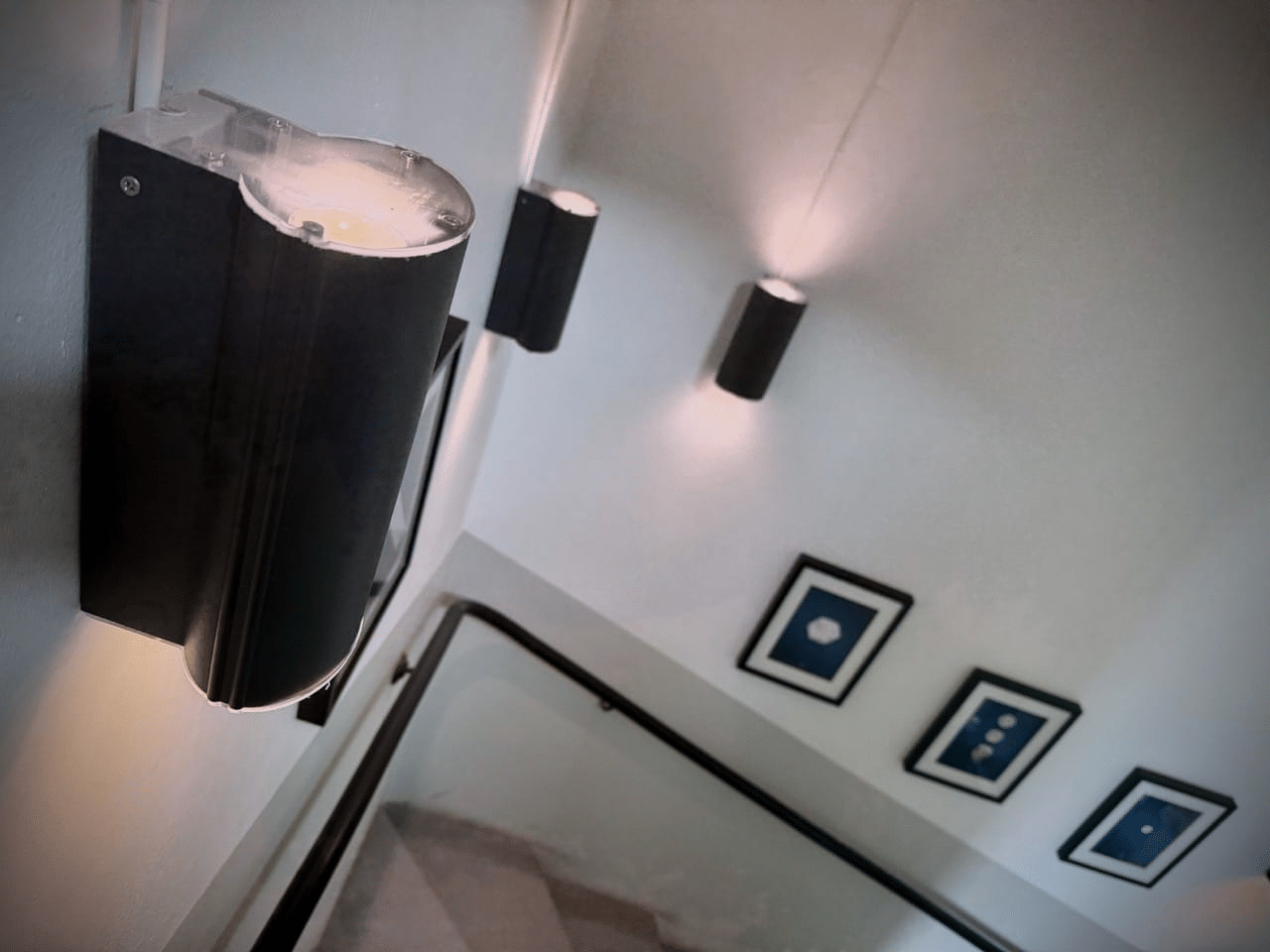
Staircases and other high-traffic areas (such as corridors, public restrooms, or parking lots) are especially demanding: switching can easily reach 100 cycles per day. Under these conditions, conventional replacement LED bulbs often fail within months, generating constant replacements — up to 24 per luminaire over 10 years — and high maintenance costs.
To meet this challenge, Optoga has subjected its AC LED modules to laboratory testing that certifies their durability, with remarkable results:
– Over 1,000,000 ON/OFF cycles at 25°C.
– 500,000 cycles at 85°C.
– Target lifespan of up to 100,000 hours, with stable color and luminous flux.
These results — based on specific tests and technical documentation — confirm that Optoga LED modules greatly outperform conventional replacement solutions, ensuring reliable and predictable operation in intensive-use applications.
Smart Control in LED Luminaires: DALI, Casambi, and D4i
Luminaire modernization not only improves today's efficiency: it also prepares each project for tomorrow's challenges. Thanks to LED modules, it is possible to integrate control systems like DALI, Casambi, or D4i, which provide key advantages such as:
– Precise and flexible dimming (schedules, presence, daylight).
– Optimized energy consumption.
– Real-time monitoring.
– Compliance with the EPBD (European Energy Performance of Buildings Directive).
Prepared for new European climate requirements
Lighting is central to the European Union’s climate strategy.
Initiatives such as the Fit for 55 package and EPBD requirements set increasingly strict standards for efficiency, durability, and circularity.
Optoga LED modules meet these demands, providing manufacturers, installers, and specifiers with solutions aligned with EU climate goals and future-ready.

Case Study: Luminaire Upgrade at the Swedish School of Textiles
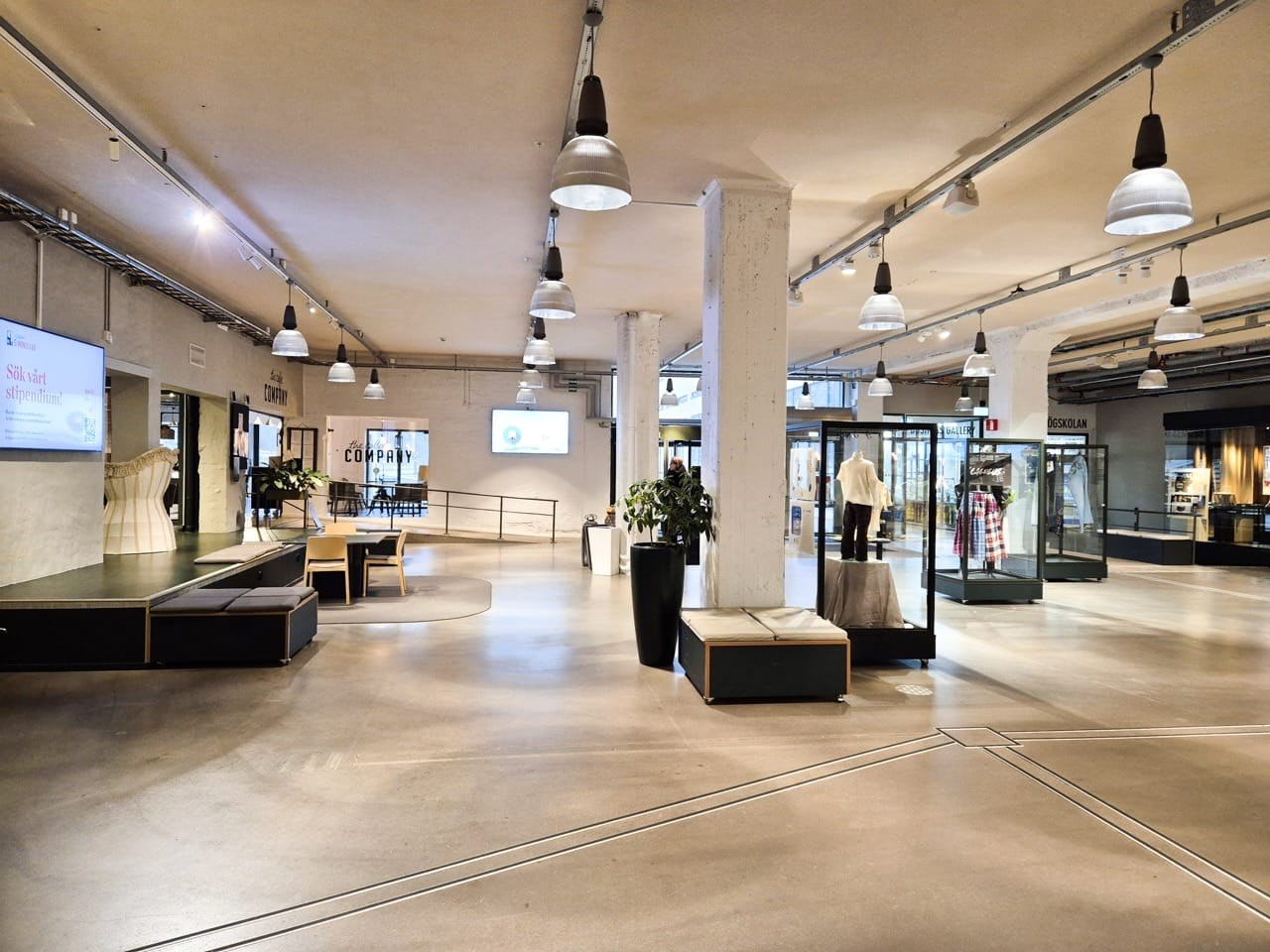
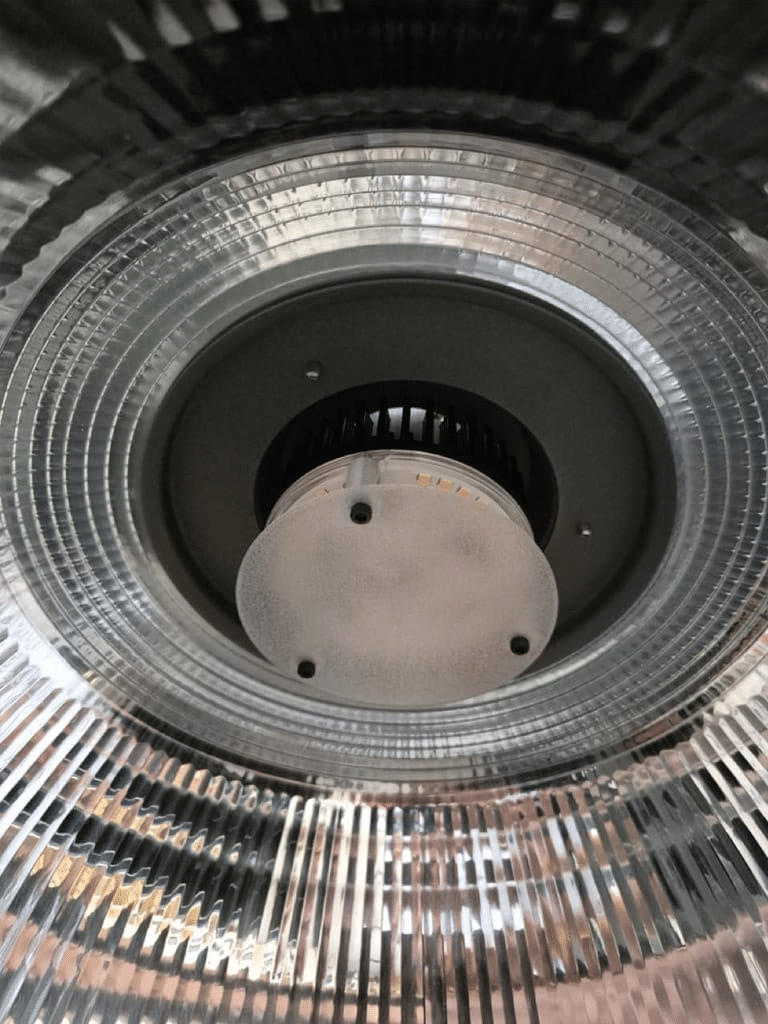
At the Swedish School of Textiles, upgrading the lighting system was a matter of vision, not just efficiency. With Fagerhult Dome luminaires nearing the end of their lifespan, discarding functional parts was not an option. The challenge was clear: combine technological innovation and smart control without compromising the original design’s aesthetics, a key factor in a high-value architectural space.
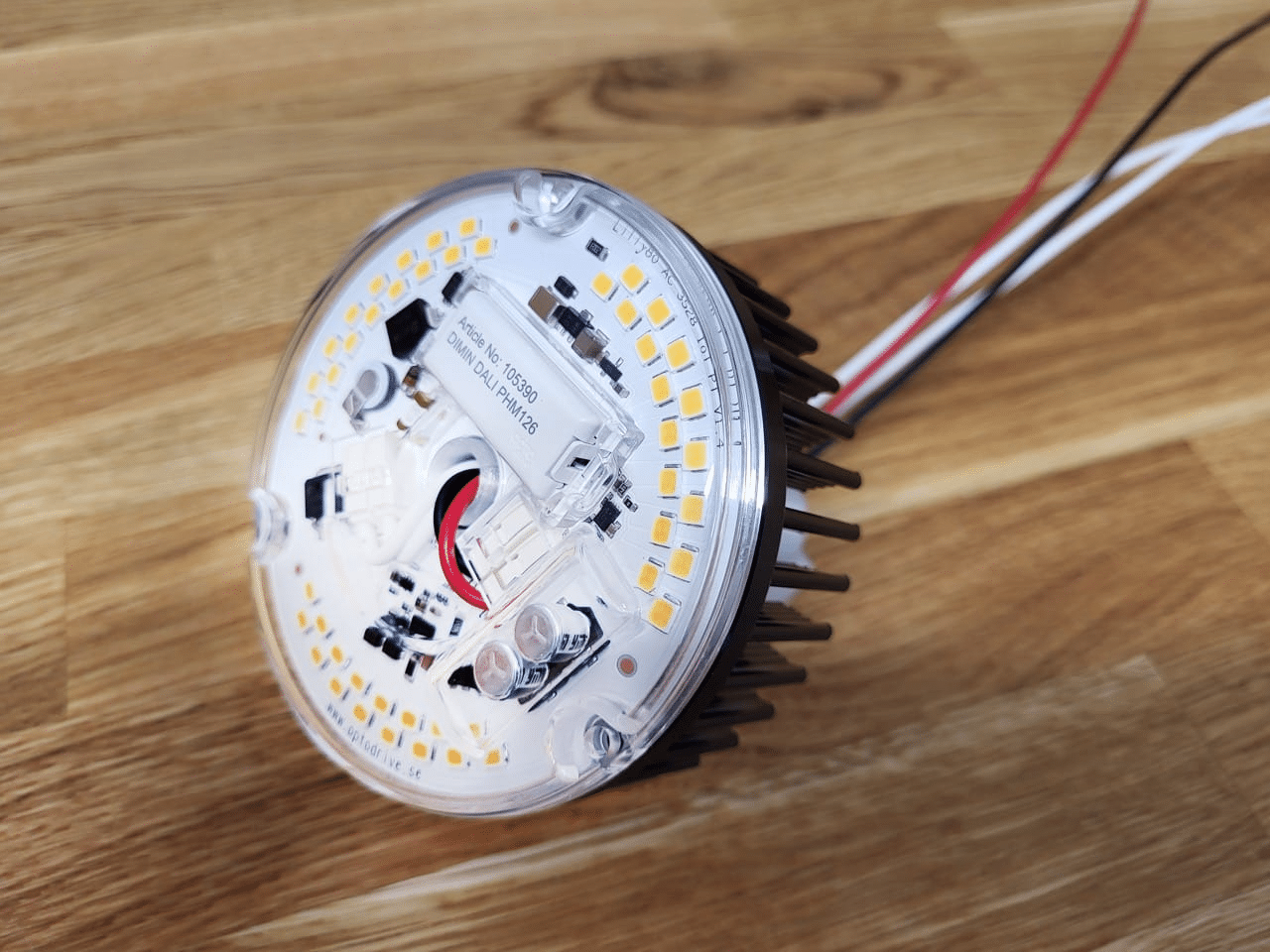
The solution came through retrofit with AC LED Lilly80 modules (SEE DATASHEET)
They operate directly at 230 V with integrated DALI control, eliminating the need for external drivers.
They provide high-quality light and long lifespan, even in intensive-use applications.
They allow real-time smart supervision and adjustment, with information on status and energy consumption.
The result: luminaires that not only regained their lifespan but became an example of LED retrofitting in a heritage space. Sustainable, efficient, and future-ready lighting, thanks to technical collaboration and intelligent use of resources, while respecting the original design aesthetics, a key factor for architects and designers.
Key Takeaways from this Case Study
Efficiency without full replacement: LED module retrofitting preserved the heritage value of the luminaires, reduced waste, and avoided building interruptions.
Integrated smart control: management via DALI optimized consumption and allowed real-time operation adjustments.
230 V AC solution: eliminating the external driver reduces components, simplifying integration and increasing reliability.
Prolonged light quality and lifespan: stable color and luminous flux, targeting up to 100,000 hours of operation.
Specialized technical collaboration: manufacturer-guided integration ensured a reliable, replicable, and guaranteed outcome.
LED Retrofitting Process in Existing Luminaires
LED module retrofitting is not just a lamp swap: it is a controlled technical process ensuring the final luminaire meets all reliability, safety, and regulatory requirements.
It usually includes four key phases:
1. Initial audit: inspecting the housing, optics, and thermal dissipation capacity.
2. Module and control system selection: defining power, luminous flux, color temperature, and compatibility with control systems (DALI, Casambi, D4i).
3. Integration and validation: conducting thermal, electrical, photometric, and electromagnetic compatibility (EMC) tests.
4. Documentation and CE marking: updating the luminaire's technical file and issuing the relevant documentation.
Thus, LED retrofitting becomes a safe, sustainable, and guaranteed process, providing value to manufacturers, installers, and specifiers alike.
FAQ – Frequently Asked Questions About Upgrading LED Luminaires
When is it better to upgrade vs. replace a luminaire?
Upgrading or retrofitting is recommended when the housing and optics are in good condition. If they are damaged or do not meet current regulations, full replacement is the best option.
Do I lose CE marking if I upgrade a luminaire?
No. CE marking is maintained as long as the manufacturer or authorized installer reviews compliance and updates the technical documentation.
Who can replace an LED module?
LED modules are part of the luminaire, so their replacement or upgrade must be performed by the manufacturer or authorized installers, ensuring safety and reliability.
What about luminaires with presence sensors?
Conventional replacement bulbs often fail quickly in these cases. In contrast, Optoga AC LED modules have demonstrated resistance of up to 1,000,000 ON/OFF cycles at 25°C and 500,000 at 85°C, ensuring reliable operation in intensive-use applications.
What benefits does LED module retrofitting bring to a rehabilitation project?
Retrofitting with LED modules allows preserving original luminaires, which is crucial in heritage buildings or those with unique architectural design. This achieves energy efficiency and smart control without altering aesthetics, while also reducing costs and waste.
From Theory to Project: Upgrade Luminaires with Guarantee
Upgrading luminaires with LED modules is a future-proof investment: it preserves original aesthetics, reduces waste, provides significant cost savings, and ensures stable performance ready for digital control and regulatory compliance.
At LCE, we support manufacturers, installers, and specifiers at every stage of the process. We offer a complete service for technology replacement and upgrading in luminaires, with reliable, efficient, and sustainable solutions that make each project a safe bet for today and tomorrow.
👉 Contact our sales department
Source: https://optoga.com/
This post Upgrading Luminaires with LED Modules was first published on LCE LED.