Terrassa has changed its lighting. Thanks to a new urban development project led by the city council, the Catalan city has modernized its illumination by installing LED luminaires from seven different manufacturers. Using an SSL control scheme and Tridonic controllers, the project achieved excellent uniformity throughout.
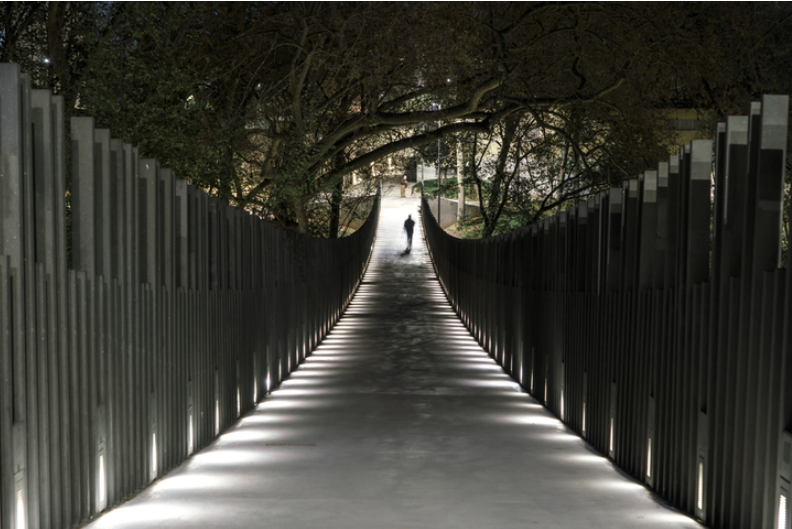
According to details revealed by the LED controller manufacturer Tridonic, the project replaced 29,000 light points across the city. One of the most relevant factors for its success was minimizing the environmental footprint as much as possible. The city council, in collaboration with the leading infrastructure management company imesAPI SA, installed Tridonic controllers for each luminaire to ensure a unified appearance and proper control functionality. The result is adjustable urban lighting of optimal quality and low energy consumption.
The result is adjustable urban lighting of optimal quality and low energy consumption.
The project began in 2013 with the goal of saving 17,000 MWh of electricity per year. However, it was not until 2019 that the lighting modernization project was financed as part of a longer-term climate protection initiative called Terrassa Energia Inteligente.
Albert Marín, Smart City Project Manager for Terrassa, stated that the project involved a wide combination of manufacturers due to the variety of luminaires required. Most of the project focused on outdoor lighting, but it ranged from public street lighting to façade illumination and pedestrian area lighting. Manufacturers included global suppliers such as Signify and Schréder, as well as regional and specialized manufacturers like Novatilu, Carandini, and Disano.
The municipal team in Terrassa wanted uniformity in light quality. They aimed for street lighting, wall washers, and pedestrian pathway lighting to all dim along a similar chromaticity curve. The primary requirement for unification was that all products could perform energy-saving functions, such as dimming lights late at night or when traffic was low.
Finally, all new luminaires were equipped with controllers from the Tridonic ADV (advanced) product family. One of the benefits of these controllers is the ability to program multiple dimming curves. Tridonic offers a dedicated programmer called U6Me2. Luminaires can be programmed via wireless NFC (Near Field Communication) or through Tridonic ready2mains technology, which operates over the electrical network.
One of the most challenging aspects of this urban project was interoperability. In multi-vendor environments, control systems can be problematic. Still, one of the most notable examples of interoperability is Stockholm: the city required that all products implemented comply with TALQ Consortium standards (TALQ ensures that islands of different network technologies are all connected to the same CMS, Central Management System, though this does not guarantee that every node in a municipal network has the same luminaire functionalities).
One of the most challenging aspects of this urban project was interoperability.
Another success to highlight is the combination of functions and the ability for both autonomous and programmatic control. City lights can dim based on the time of day across eight levels and also respond to traffic. For example, products installed near bus stops and train stations have occupancy sensors that increase light levels when pedestrians are present.
The result, according to Marín, is “excellent outdoor lighting, now extremely reliable and more efficient than ever; an important milestone in the fight against climate change.” Data confirms this: the combination of controls and LED technology has reduced energy consumption for the city’s outdoor lighting system by approximately 80%. The city projects annual savings of 12,200 MWh. As part of the Terrassa Energia Inteligente initiative, the city has now embarked on a new project focused on interior lighting.