Proper lighting will determine the work performance of healthcare staff: a new study, conducted by researchers at the Pacific Northwest National Laboratory (PNNL), analyzed the effect of lighting on nurses’ job performance, workplace well-being, and their overall perception of the environment.
It is well known that light creates different environments depending on its type. For several years now, and especially with the emergence of Covid-19, lighting has become an increasingly high-priority installation in hospitals. Why? It has been shown that the psychological well-being and behavior of certain patients, visitors, and medical staff are highly affected by the physical environment and lighting. For this reason, particularly in recent years, designers are developing new hospital environments that move away completely from traditional designs.
Specifically, it was concluded that for nursing staff, the three environmental attributes that significantly influence their health and work efficiency are air quality, acoustics, and lighting.
Nurses evaluated their well-being with different lighting solutions in four hospitals
The study involved four hospitals that had different lighting systems in their surgery and medical units, in older, traditional hospitals characterized by having few luminaires (less than 5) and no dimming capability.
Hospital number 4 had a more contemporary and advanced lighting system. In this case, the rooms featured luminaires with separate controls for each zone and additional lighting for nighttime mobility, as it had previously been rated as “poor.” It was concluded that nighttime work incidents, such as falls by staff and patients, could be reduced with adequate lighting.
Light regulation and control improve both user and staff experience
Participants at Hospital number 4 reported higher lighting quality, fewer complaints from patients, and less need for supplementary lighting compared to professionals at the other hospitals. It was also highlighted that the importance of lighting controls was a key factor: staff were much more satisfied with their ability to control the lighting.
Likewise, the Simulation Teaching and Research Center of the Emergency Department (ED-STAR) at Mount Sinai Hospital in New York studied the hypothesis of whether tunable, indirect, full visible spectrum (white) LED solid-state lighting enriched in blue could improve medical well-being and the execution of clinical procedures in the emergency department, compared to procedures carried out under fluorescent lighting (the standard treatment condition in most hospitals worldwide).
For this reason, lighting is increasingly recognized as critically important and should be considered when designing medical environments. It is worth exploring new approaches and innovative lighting designs to improve the perception of these healthcare spaces and enhance the work of medical staff.
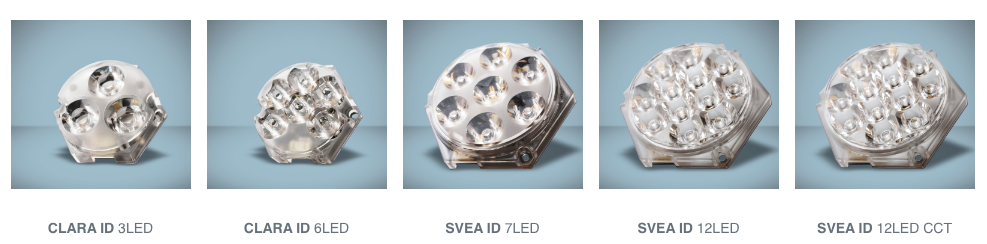
At LCE, we are always surrounded by the best. Our partner Optoga offers a wide catalog of lighting specifically designed for medical use. The smartest solutions create value for healthcare facilities and reduce technical issues.
If you want more information or guidance, do not hesitate to contact us.